 Author: Laura Bulmer
Selecting the right construction document management system is essential for keeping projects running smoothly, efficiently, and without unnecessary risk.
Across the design, construction, and handover phases, project information is constantly evolving. With drawings, specifications, RFIs, contracts, safety documents, and changes happening daily, it’s easy for teams to lose track especially if they’re relying on emails, spreadsheets, or paper files.
A modern Construction Document Management System (DMS) centralises project information and provides a structured, digital workflow for storing, tracking, sharing, and updating documentation. The result is greater efficiency, reduced administrative burden, stronger compliance, and clearer communication across all project stakeholders whether they’re in the office or on-site.
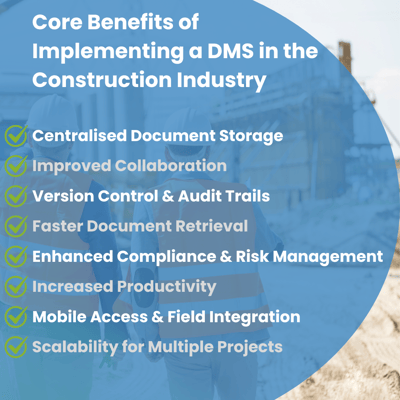
A construction document management system is a secure, centralised platform used to store, organise, and control all project-related documentation, including:
Drawings and blueprints
Contracts and agreements
Architect and engineering plans
Specifications and manuals
Invoices, forms, and reports
Modern DMS platforms offer cloud-based access, allowing authorised users to view up-to-date documents from any location and any device. Features such as version control, permissions management, audit trails, and automated workflows help ensure that teams are always working from the latest approved information reducing errors, rework, and delays.
Throughout the entire project lifecycle from design and planning through construction, handover, and operations documents remain accessible and traceable. Organisations that continue to rely on paper files or disconnected systems often struggle with inefficiency, inconsistent information, and unnecessary project risk.
A robust construction DMS is no longer a “nice to have” it’s a key component of delivering projects on time, on budget, and to compliance standards.

Document management software offers a variety of useful features and it's important to consider the specific needs for your business. The features we suggest to look out for are:
The system should have an intuitive and user-friendly interface that makes it easy for all team members to access and navigate to documents.
A robust search and filter function helps users quickly find the documents they need, saving time and reducing frustration. The construction document management system should provide an efficient way to archive and store documents securely after a project's completion for future reference or regulatory compliance.
With teams often spread across multiple sites, remote offices, and field locations, cloud access is now essential.
A cloud-based construction DMS enables:
Real-time collaboration from any location
Immediate access to the most current documents
Reduced reliance on physical storage or local servers
Mobile access is equally critical. Field teams should be able to open drawings, mark up plans, upload photos, and update documentation directly from a phone or tablet. This ensures information flows quickly and reduces project slowdowns.
Construction projects involve a wide range of file formats from CAD drawings and BIM models to PDFs, images, spreadsheets, and reports. Your DMS should seamlessly support the formats your teams use daily and integrate with common design and construction software.
Equally important is strong version control. With plans and specifications changing often, the system should automatically:
Track revisions
Record author and timestamp details
Prevent teams from using outdated or incorrect files
Maintain a complete history for audit and compliance purposes

If your project demands compliance with specific regulations, ensure that the system provides audit trails and reporting features to maintain transparency, accountability, and compliance.
When evaluating the features of a construction document management system, it's essential to align the features and capabilities with your specific project needs and the workflow of your construction team.
Careful consideration of these factors will help you choose a system that enhances productivity and efficiency while ensuring the security and integrity of your construction documents.
Security is a critical requirement for any construction document management system, especially when handling sensitive project data, contractual information, financial documents, and proprietary designs.
A reliable DMS should include:
Data encryption (in transit and at rest) to safeguard documents against unauthorised access
Granular access controls and user permissions so teams only see the information relevant to their role
Multi-factor authentication (MFA) to add an extra layer of protection for system logins
Audit trails to track who accessed, edited, or shared documents
In addition to security, it’s important to ensure the platform has robust backup and disaster recovery processes. Automatic backups, redundant storage, and rapid data restoration capabilities help protect your business from data loss, system failures, or unexpected downtime keeping projects moving without disruption.
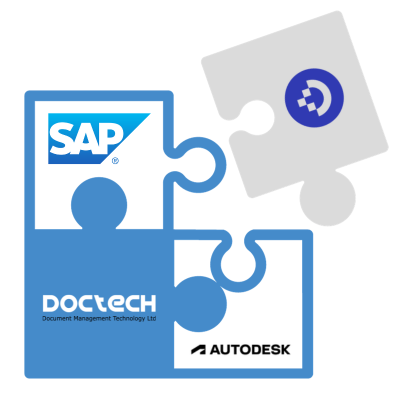 Document management integration with popular project management, scheduling, and collaboration tools (e.g. Procore, PlanGrid, Autodesk, BIM 360) can streamline document workflows and data sharing.
Features such as commenting, markup, and task assignment can improve collaboration and communication among team members working on a project.
A good construction document management system should be able to integrate with your other systems and provide simple ways for employees to collaborate on documents.

Automation features help to streamline processes such as document approval workflows, reducing the need for manual intervention and minimising errors.
Ensure that the system can accommodate the size and complexity of your projects. It should be future-proofed and able to handle a growing number of documents and users.
Consider the availability of training resources and customer support. Adequate training and support from the chosen supplier are imperative to ensure the successful adoption of the system by your team.
Assess the pricing structure of the document management system, including subscription fees, user licenses, and any additional costs for data storage or premium features.
Research and seek feedback from construction professionals who have used the system to understand its strengths and weaknesses in real-world scenarios.
When documentation isn't stored correctly, or document control is lacking, costly mistakes can happen. Legal disputes are a regular occurrence in the construction industry with claims costing money, damaging reputations, and putting clients off.
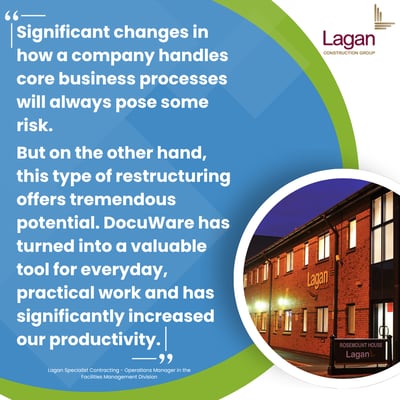
DocTech’s construction-specific solutions allow teams to share, track, and manage all project documents such as bids, submittals, approvals, punch lists, field data, work orders, and audits in real-time, from any location. Read how we supported Lagan Specialist Construction Group with just that, providing a flexible solution with remote access to information.
Fixing errors represents a considerable amount of wasted resources, but a dedicated construction document management system will help. Get in touch with our team at info@doctech.co.uk or book a time in our diaries below.


 info@doctech.co.uk
 0161 647 7040